




AI Coding___ Lately, I’ve been feeling like that lone dinosaur staring at a changing world. In conversations with colleagues and friends, I’m often asked why I don’t use AI tools to write code. Many seem surprised by my stance in an era where automation and large language models dominate headlines. To make sense of it—both for others and for myself—I’ve gathered my reasons.
Read More: Video: The Ultimate Step-by-Step Guide to Building a Powerful Streaming App That Captivates Users
Writing Is Thinking
I once came across an interview with Giorgio Iemmolo, a linguist and director of the Language Center at ETH Zurich—my alma mater. He said something that struck me deeply:
“If we leave writing to AI chatbots, we won’t just lose a craft and the skills. Writing is thinking. Thought and expression arise together.”
That idea perfectly mirrors how I view programming. When I write code, I’m not just giving instructions to a machine; I’m thinking, shaping, and refining my understanding of a problem. Each function and loop reflects a decision-making process. Sometimes, halfway through, I realize my approach is wrong and start over.
That’s the beauty of writing code yourself—it’s a cognitive exercise. The process sharpens understanding and leads to what I call the mental model.
Building the Mental Model
Coding the “hard way” is an investment in clarity. While AI might generate a quick fix, manually writing code builds a deep mental blueprint of the system. That model becomes invaluable when something breaks or needs modification.
Much of my professional life revolves around maintaining and improving existing libraries. Only about 20% of my time goes into building new features. When bugs appear, I can often narrow down the issue before touching the keyboard. My familiarity with the system—the mental model—helps me see through complexity.
This understanding can’t be measured or displayed on a GitHub graph. Yet it’s the invisible backbone of productivity. Writing code myself may take longer initially, but it pays dividends when troubleshooting, optimizing, or scaling.
I Don’t Feel Unproductive Without AI
Some assume I resist AI because I fear change or efficiency loss. The truth is, I’ve always felt productive without it. My slowest days aren’t caused by coding speed but by unclear goals or poor problem definitions.
I’ve experimented with AI-assisted tools like JetBrains’ Junie, but the results were uninspiring. Maybe my trials were too shallow, but they left me unconvinced. AI didn’t accelerate my creativity—it diluted it. For now, I feel no need to revisit those tools. My focus remains on mastering the craft I enjoy.
The Lack of Excitement Around Generative AI
I’ll admit this is personal, but the buzz around generative AI rarely excites me. Each time a new model launches—boasting better benchmarks, sharper images, or longer videos—I feel the same indifference I’d feel toward an iPhone 17 release. It’s technically impressive but emotionally flat.
Maybe that’s age speaking. Or maybe it’s because I see through the hype. Yes, AI offers groundbreaking potential:
- It’s transforming natural language processing.
- It makes NPCs in games more dynamic.
- It helps analyze and search through vast, unstructured data.
These applications truly are revolutionary. But generating code or art on demand? That doesn’t spark joy for me. Creation, to me, is meaningful because it requires thought, struggle, and insight—things machines don’t experience.
A Pessimistic Glimpse at the Future of Craft
As a father of two, I’ve always been eager to share coding with my children. When my eldest first explored programming through Scratch, I was thrilled. Recently, she asked to learn Python after watching a Minecraft video about modding. I hesitated.
A part of me wondered whether teaching her to code still held value. Would it soon become an obsolete skill? That hesitation unsettled me. Coding has always been my craft, and realizing I subconsciously questioned its worth was painful.
Perhaps my concern is premature, but it reveals a truth: when technology automates creativity, it risks eroding the joy of making things by hand.
The Web Is Losing Its Soul
Beyond code, I dislike what generative AI is doing to the internet. The rise of mass-produced, AI-generated content has made the web feel cluttered, repetitive, and shallow. Original voices are drowned out by algorithmic noise.
Writers like Dan Sinker have spoken about this shift, calling it “The Who Cares Era.” I agree—we’re losing the sense of care that built the early web. People used to create for curiosity, not clicks. I miss that.
I still believe in the open web—in people writing authentic, imperfect, human text. Draw something. Build something. Publish it. Leave your fingerprints on your creation. AI doesn’t do that—it copies the fingerprints of others.
The Simplest Reason of All: I Love to Code
At the heart of it all, my reason for not using AI to write code is simple: I love doing it myself.
For some, coding is a task to outsource. For me, it’s a passion that engages both logic and creativity. When I hear developers boast that they’ve “won” because they no longer write code and just manage AI agents reviewing pull requests, I can’t help but think—really? You enjoy that more?
I don’t. I enjoy crafting each line, debugging an issue, watching an idea come alive through code. That’s my victory.
Rediscovering Passion Through Ikigai
In my mid-forties, I’ve had chances to move into management or leadership, away from hands-on coding. For a while, I even ran a software agency. Yet, over time, I realized something simple but powerful: I’m happiest when I’m building.
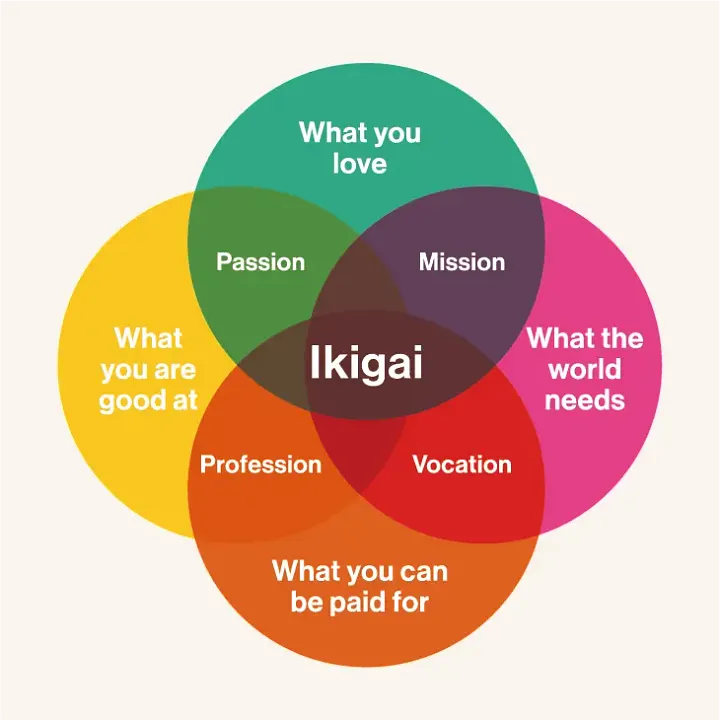
That clarity reminded me of a Japanese concept I deeply connect with—Ikigai—the intersection of what you love, what you’re good at, what the world needs, and what you can be paid for. Coding sits perfectly at that crossroad for me. It challenges me intellectually, pays the bills, and still excites me each morning.
I may not chase every shiny AI tool, but I do chase fulfillment—and for me, fulfillment lies in crafting something with care and understanding.
Frequently Asked Questions:
Why do some developers prefer not to use AI for coding?
Many developers believe that writing code manually strengthens problem-solving skills, builds deeper understanding, and preserves creativity. They see coding as both a mental exercise and an art form, not just a means to an end.
Does avoiding AI make coding less efficient?
While AI tools can increase short-term speed, developers who code manually argue that the deeper understanding gained from direct problem-solving saves time in debugging, maintenance, and long-term project success.
How does writing code by hand improve thinking skills?
Writing code engages critical thinking and cognitive reasoning. It helps developers visualize logic, build mental models, and better comprehend how different parts of a system interact—skills that automated tools can’t fully replicate.
Is using AI to generate code considered bad practice?
Not necessarily. AI-generated code can be useful for repetitive tasks or prototypes. However, relying too heavily on it may weaken a developer’s independent thinking and reduce their connection to the craft of programming.
What are the risks of depending on AI for coding?
Overdependence on AI can lead to shallow understanding, reduced creativity, and potential security or quality issues in the generated code. It may also limit a developer’s ability to debug or adapt complex systems independently.
Can AI replace human creativity in software development?
AI can simulate creativity but cannot replicate human intuition, empathy, or the nuanced judgment required for elegant, purposeful design. True innovation still relies on human imagination and critical thought.
How can developers balance AI assistance and personal skill?
The best approach is to treat AI as a supportive tool—helpful for research, syntax, or testing—while ensuring that critical thinking, design, and decision-making remain human-driven.
Conclusion
In an age where artificial intelligence promises speed and convenience, it’s easy to forget the deeper value of human creativity and craftsmanship. Coding, at its core, is more than assembling logic—it’s an act of reasoning, imagination, and problem-solving. By choosing not to rely fully on AI for coding, developers preserve their ability to think independently, refine their skills, and maintain a meaningful connection to their work. AI may be a powerful ally, but human ingenuity remains irreplaceable. The joy of building, learning, and understanding through code is what gives technology its true purpose.
