



October 1 marked International Women in Robotics Day, a moment to celebrate the innovators shaping the future of technology. This year, we proudly present “Women in Robotics You Need to Know About 2025”, highlighting extraordinary women transforming the field. Robotics is no longer confined to factories or labs—it now explores space, nurtures healthcare, cultivates food, and connects the world. Behind these groundbreaking advancements are visionary women who lead research teams, launch startups, set industry standards, and inspire future innovators. Yet, too often, their contributions remain under-recognized. This list aims to make their achievements visible and celebrated.
A Global Showcase of Robotics Leaders
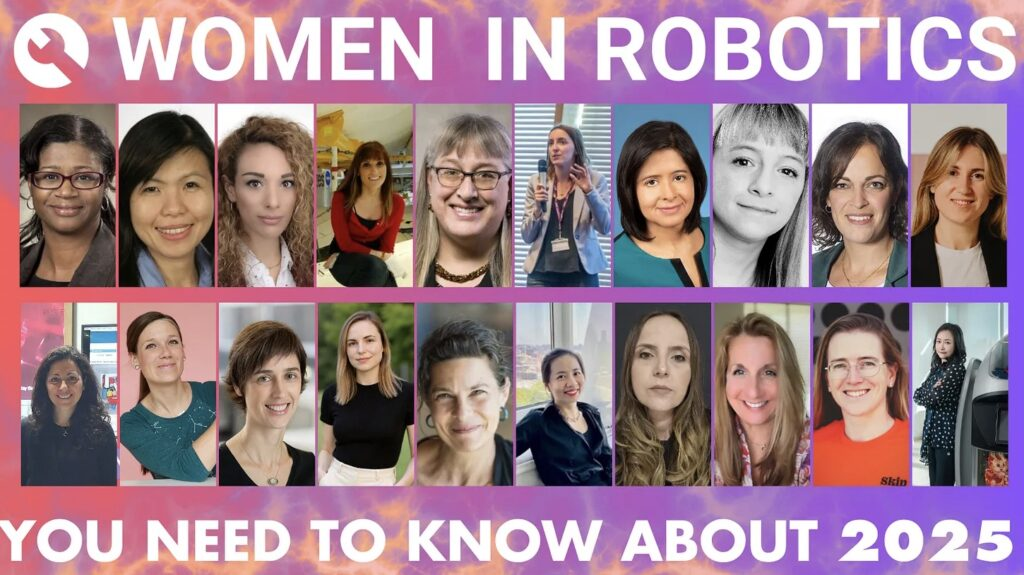
The 2025 list features 20 remarkable women who are shaping robotics today. They include professors, engineers, founders, communicators, and project leaders. Some are early-career trailblazers, while others have decades of experience transforming the field. Their innovations span tactile sensing that allows robots to “feel” like humans, swarm robotics for medicine and environmental applications, and embodied AI designed for everyday life.
These honorees hail from across the globe, including Australia, Brazil, Canada, China, Germany, Spain, Switzerland, the United Kingdom, and the United States. Together, they highlight the diversity, talent, and expansive possibilities of modern robotics.
Why Representation Matters
Celebrating these women goes beyond recognition—it challenges the persistent invisibility of women in robotics. Representation is crucial. When women’s achievements are overlooked, it reinforces the false notion that robotics is a male-dominated field. These innovators prove otherwise. They are discovering, leading, creating, and redefining the boundaries of what robots can achieve.
By highlighting their work, we aim to inspire the next generation, foster collaboration, and advance diversity and inclusion across STEM.
Spotlight on the 2025 Honorees
Heba Khamis
Lecturer at UNSW and co-founder of Contactile, Heba develops tactile sensors that give robots a human-like sense of touch, enabling them to handle delicate materials with precision.
Kelen Teixeira Vivaldini
Professor at UFSCar, Brazil, Kelen researches autonomous robots, intelligent systems, and mission planning, applying her work to environmental monitoring and industrial inspection.
Natalie Panek
Senior engineer at MDA, Natalie specializes in robotics and automation for space technology. Recognized in Forbes’ “30 Under 30” and WXN’s Top 100, she combines technical mastery with leadership in complex aerospace projects.
Joelle Pineau
A Canadian AI researcher, Joelle leads the Reasoning & Learning Lab at McGill and previously served as Meta AI’s vice-president. She co-founded SmartWheeler and Nursebot, championing reproducible AI research.
Hallie Siegel
As a science communicator and former Robohub editor, Hallie connects researchers and the public, making robotics accessible and inspiring global engagement.
Xiaorui Zhu
Co-founder of DJI and RoboSense, Xiaorui leads Galaxy AI & Robotics, advancing UAVs, autonomous driving, and mobile robotics through award-winning research.
Lijin Aryananda
A robotics researcher at ZHAW, Lijin develops AI methods for humanoids and medical devices, bridging academic research with industrial applications while fostering inclusive leadership.
Georgia Chalvatzaki
Professor at TU Darmstadt and head of the PEARL Lab, Georgia blends AI with human-centric robotics, enabling mobile manipulators to safely collaborate with people.
Mar Masulli
CEO and co-founder of BitMetrics, Mar applies AI to give machines vision and reasoning capabilities. She also contributes to the Spanish Robotics Association board.
Alona Kharchenko
CTO of Devanthro, Alona develops embodied AI for home environments, earning recognition in Forbes’ 30 Under 30.
Nicole Robinson
Co-founder of Lyro Robotics, Nicole deploys AI-driven pick-and-pack robots, transforming industrial automation.
Dimitra Gkatzia
Associate professor at Edinburgh Napier, Dimitra specializes in natural language generation for human-robot interaction, enhancing communication between people and machines.
Sabine Hauert
Professor at the University of Bristol and co-founder of Robohub, Sabine pioneers swarm robotics for nanomedicine and environmental applications.
Monica Anderson
Professor at the University of Alabama, Monica researches distributed autonomy and inclusive human-robot teaming, advancing collaborative robotics.
Shilpa Gulati
With over 15 years of experience, Shilpa leads engineering teams that develop cutting-edge robotics solutions, scaling complex systems across industries.
Shuran Song
Stanford professor Shuran develops low-cost systems for robot perception and contributes influential open datasets, enabling broader access to robotics research.
Kathryn Zealand
Co-founder of Skip, Kathryn develops powered clothing, or “e-bikes for walking,” with a background in theoretical physics and innovative wearable robotics.
Ann Virts
A NIST project leader, Ann develops test methods for mobile and wearable robots, earning recognition with a U.S. Department of Commerce Bronze Medal.
Carole Franklin
Director of standards development at the Association for Advancing Automation (A3), Carole leads ANSI & ISO robot safety initiatives, ensuring the safe and effective deployment of robotics worldwide.
Meghan Daley
NASA project manager Meghan leads teams that integrate simulations for robotic operations, preparing astronauts for the ISS and beyond.
Throughout October, we will spotlight five honorees each week, sharing deeper profiles and insights into their groundbreaking work.
The Impact of Women in Robotics
Robotics is more than technology—it’s about people, innovation, and societal impact. Women in this field are advancing the frontiers of science while inspiring future generations. By showcasing their stories, we emphasize that diversity strengthens creativity, collaboration, and problem-solving.
Celebrating these leaders encourages young women to envision themselves in robotics careers, supports mentors and networks for innovation, and challenges industries to embrace inclusive, equitable practices.
Frequently Asked Questions:
What is International Women in Robotics Day?
International Women in Robotics Day, celebrated on October 1, honors women innovators in robotics, highlighting their contributions to technology, research, and industry.
Who are some notable women in robotics in 2025?
The 2025 list includes Heba Khamis, Natalie Panek, Joelle Pineau, Sabine Hauert, Shuran Song, and others who are leading research, startups, and AI innovations worldwide.
What fields do these women work in?
They work across robotics applications including AI, tactile sensing, swarm robotics, human-robot interaction, autonomous systems, wearable robotics, and space exploration.
Why is highlighting women in robotics important?
Recognition encourages diversity in STEM, inspires future innovators, and challenges the misconception that robotics is male-dominated. Representation strengthens innovation and inclusion.
How does robotics impact daily life today?
Robotics now assists in space exploration, healthcare, agriculture, environmental monitoring, manufacturing, and personal AI, improving efficiency and quality of life globally.
How can young women pursue a career in robotics?
Start with STEM education, participate in robotics clubs or competitions, seek mentorship from industry leaders, and stay informed about emerging technologies and research opportunities.
Are these women only from certain countries?
No. The 2025 honorees represent Australia, Brazil, Canada, China, Germany, Spain, Switzerland, the UK, and the US, showing that robotics innovation is global.
Conclusion
The women featured in “Trailblazing Women in Robotics Who Are Redefining Innovation in 2025” demonstrate that robotics is a field driven by vision, creativity, and collaboration. Their groundbreaking research, innovative startups, and leadership in AI, automation, and human-robot interaction are reshaping technology and society. By celebrating their achievements, we not only acknowledge their contributions but also inspire the next generation of women in STEM. Diversity in robotics strengthens innovation, drives inclusion, and ensures a future where technology benefits everyone. These trailblazers remind us that the future of robotics belongs to all who dare to imagine, create, and lead.
